Plastic and polymer marking
Date codes, ratings and logos on ABS, acrylic, nylon and acetal.
- Category
- Marking
- Timing
- Quoted after the sample
Materials
- ABS
- Acrylic
- Nylon
- Acetal
- Polycarbonate
The work
Product details
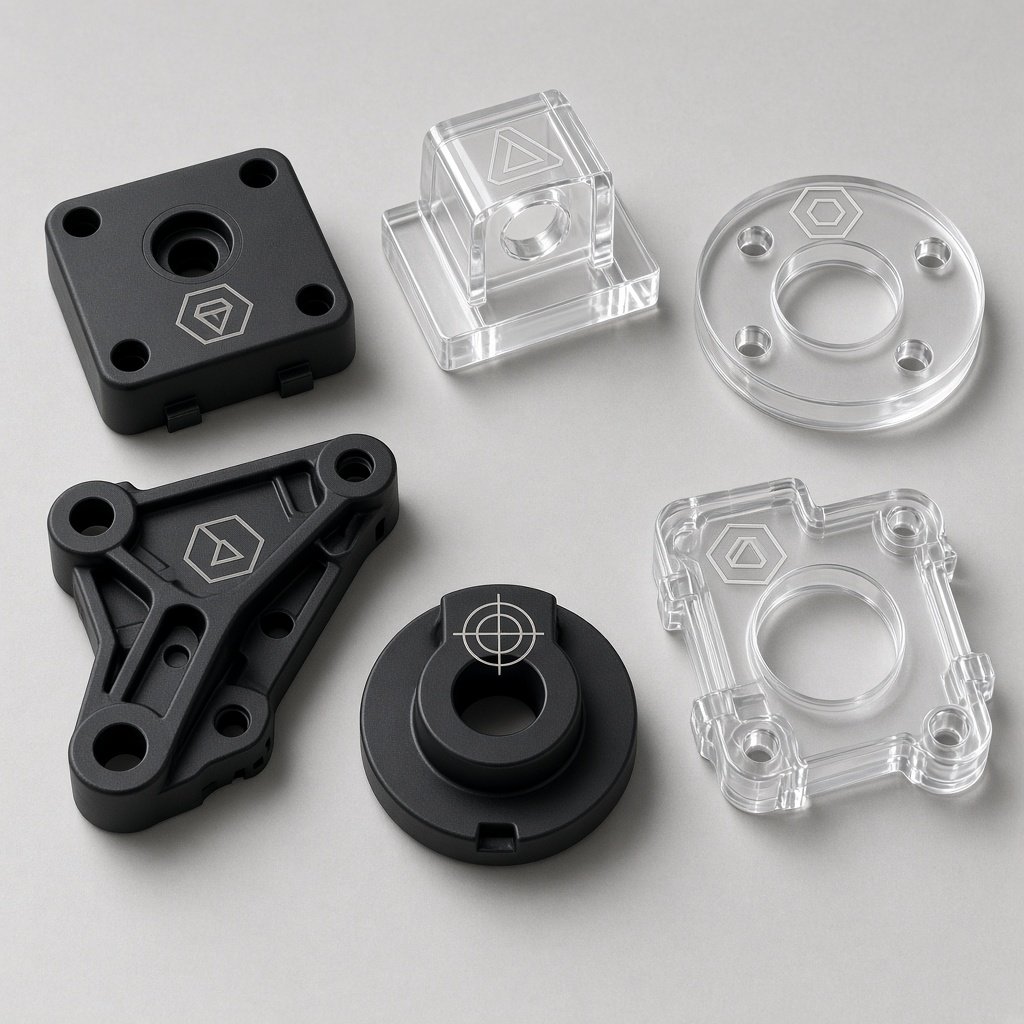
Plastics do not share one setting. A black ABS housing can take a pale, clean mark. A natural nylon can char if the same setting is used. A short sample is marked before a batch, on the actual resin and colour.
ABS, acrylic, nylon, acetal and polycarbonate are the usual materials. PVC is refused. Additives, glass fill and flame retardant are worth naming in the inquiry, because they move the result more than the trade name of the plastic does.
Used for
- Housings
- Date codes
- Ratings
- Logos
Before you inquire
Questions about Plastic and polymer marking
Is the mark ink, or a sticker?
Neither. This is a fiber-laser mark: an anneal that leaves the surface almost flush, or an engraving when the mark must be felt. There is nothing to peel and nothing to refill.
Which materials are marked?
The usual materials are ABS, Acrylic, Nylon, Acetal, Polycarbonate. PVC is not marked. A new grade, a plated surface, or a plastic that has not been marked here is sampled on one piece before a batch.
Can the mark be a code?
Yes. A logo, a rating, a serial, a QR code, or a Data Matrix can be marked. A human-readable line can sit with a code so the part can still be identified if the code is damaged.
How is the timing quoted?
Quoted after the sample. Send the part, the quantity, and the artwork or the serial data with the inquiry.
Inquiry
Ask for Plastic and polymer marking
This inquiry is saved against this product. Include the size, material, and quantity.